ADHD symptoms, hyperactivity, behaviour
Feingold-Style Elimination Diet
Remove synthetic dyes, three preservatives, and — in stage one — salicylates.
- Core restriction
- Artificial colors, artificial flavours, BHA/BHT/TBHQ, and salicylates in stage one
- Difficulty
- ●●●●●
- Check a food
- Open the food checker
A gentle reminder. This guide is for learning, not a prescription. Therapeutic diets interact with medication and conditions, so it's worth talking to your doctor or a registered dietitian before you begin.
A tidy few pages with the food lists, meal plan and reminders — good for the fridge door or the first appointment with your dietitian.
How it works
Dr Ben Feingold, a paediatric allergist, proposed in the 1970s that synthetic food additives and naturally occurring salicylates provoke hyperactivity in susceptible children. The Feingold Association of the United States runs the formal programme; what follows is a Feingold-style elimination, not the official trademarked programme, which sells its own vetted food lists.
The strongest evidence is narrower than the original claim but real: the Southampton studies led the European Food Safety Authority to require a warning label on six azo dyes stating they 'may have an adverse effect on activity and attention in children'. Effects are modest on average and much larger in a responsive subgroup.
The salicylate half of the theory is far weaker. Stage one removes salicylate-rich fruits for four to six weeks, then reintroduces them one at a time; most families find only the additive restriction matters.
Nutrition at a glance
A structured elimination and challenge, not a permanent diet — the point is to find out whether additives matter for this child.
- Stage one
- 4-6 weeks
- Additives plus salicylate foods removed
- Stage two
- One food every 3-7 days
- Salicylate foods reintroduced singly
- Additives removed
- Colors, flavours, BHA/BHT/TBHQ
- Plus benzoates in most versions
- Expected effect
- Modest, in a subset
- Roughly a third of children show a clear response
- Fruit and veg
- Keep 5 a day
- Low-salicylate choices, not fewer plants
Nutrients that often run short
- Vitamin C
- Fibre
- Plant variety
- Calcium if dairy is also cut
These are the ones worth planning for — through food where you can, and through a supplement your clinician suggests where you can't.
Key cautions
None of this is meant to frighten you off. These are simply the things that most often catch people out on this diet — the ones worth raising at your next appointment.
- Talk to a clinician
Not a replacement for ADHD treatment
Where medication or behavioural therapy is indicated, diet sits alongside it. Stopping treatment to try an elimination diet is not a fair trade.
- Talk to a clinician
Children need supervision on elimination diets
Growth, iron and calcium should be tracked by a paediatric dietitian, especially if the food list narrows further.
- Keep an eye on
Keep a proper diary and blind the challenges if you can
Expectation shapes what parents and teachers notice. Written daily ratings and challenges the child cannot spot make the answer far more trustworthy.
- Keep an eye on
Stop if there is no signal
If six weeks of careful stage one changes nothing, additives are not the driver. Return to normal eating rather than restricting further.
Used for
- ADHD and hyperactivity where an additive trigger is suspected
- Children with unexplained irritability, sleep disruption or aggression tied to specific foods
- Suspected salicylate sensitivity
- Chronic urticaria and some asthma linked to benzoates and tartrazine
What to eat
Eat freely
Whole unprocessed food
- Fresh meat, poultry and fish without marinade
- Eggs
- Plain milk, butter and natural cheese
- Plain rice, oats and unbleached flour
- Dried beans and lentils
Stage-one safe produce
- Banana
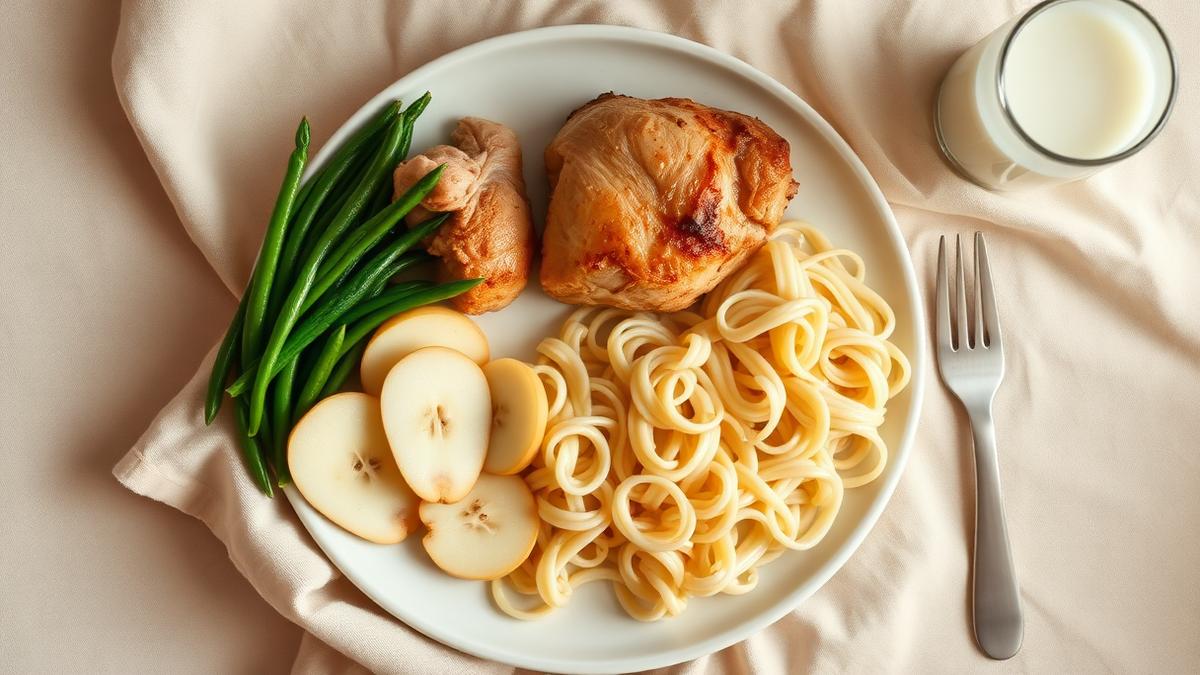
- Pear (peeled)
- Papaya
- Cantaloupe
- Cabbage
- Celery
- Lettuce
- Potato (peeled)
- Green beans
- Peas
- Cauliflower
- Bamboo shoots
Eat with care
Reintroduce one at a time after stage one
- Salicylate-rich fruit — apples, berries, grapes, oranges, stone fruit
- Tomato, cucumber and pepper
- Almonds and other nuts
- Honey, tea, mint and spices
- Aspirin and salicylate-containing medicines and toothpaste, which count towards the same load
Best to skip
Synthetic dyes
- Red 40 (Allura Red)
- Yellow 5 (Tartrazine)
- Yellow 6 (Sunset Yellow)
- Blue 1 and 2
- Green 3
- Red 3
- Any 'artificial color' on a label
Preservatives
- BHA
- BHT
- TBHQ
- Sodium benzoate in stage one
- Nitrites in processed meat, often included by families
Artificial flavour and sweetener
- 'Artificial flavour' of any kind
- Vanillin
- Aspartame, which the programme also excludes
Non-food sources
- Colored toothpaste and mouthwash
- Colored chewable vitamins and medicines
- Scented, dyed craft supplies
Three days of meals
Day 1
- Breakfast
- Scrambled eggs, plain oatmeal with a sliced banana and maple-free brown sugar.
- Lunch
- Roast chicken, peeled potato wedges, buttered peas.
- Dinner
- Grilled fish, white rice, cabbage slaw with plain oil and salt.
- Snack
- Pear slices and plain cheese.
Day 2
- Breakfast
- Homemade pancakes from unbleached flour, milk and eggs, with banana.
- Lunch
- Turkey and cheese on plain white bread with lettuce.
- Dinner
- Beef and cabbage stew with celery and potato.
- Snack
- Plain popcorn with butter.
Day 3
- Breakfast
- Plain yoghurt with papaya and a spoon of uncolored cereal.
- Lunch
- Rice bowl with plain grilled chicken, peas and cauliflower.
- Dinner
- Pork loin, mashed potato, green beans.
- Snack
- Cantaloupe.
Getting started
- 1
Set a baseline. Two weeks of daily behaviour ratings before you change anything, ideally including a teacher rating, or you will never know whether it worked.
- 2
Do stage one for four to six weeks — additives plus salicylates — as a single clean trial.
- 3
Read every label including toothpaste, vitamins, medicines and playdough. Dye exposure is not only food.
- 4
Reintroduce in single steps, three days apart, and record the response.
- 5
Involve a paediatric dietitian if the diet is narrowing. Growth and nutrient intake in children matter more than any behavioural gain.
Common mistakes
- Skipping the baseline and then arguing about whether it helped.
- Changing five things at once — diet, screen time, bedtime — during the trial.
- Assuming 'natural color' is safe when annatto is a common trigger in the same children.
- Keeping salicylate restriction permanently. It is a diagnostic phase, not a lifestyle.
- Presenting the diet as punishment. Children who feel singled out sabotage the trial.
FAQs
Is this evidence based?
Partly. Meta-analyses show a small but real average effect of artificial food colors on hyperactivity, with a larger effect in a responsive subgroup. The salicylate component has much weaker support. It is not a replacement for ADHD treatment.
Is 'Feingold' a trademark?
Yes. The Feingold Association of the United States runs the official programme and publishes member food lists. This page describes a general additive-and-salicylate elimination in that style and is not affiliated with or endorsed by them.
How fast would we see a change?
Families who respond usually report a difference within one to three weeks of a clean stage one. No change after six weeks means it is not the mechanism.
Stacking with other diets
- Feingold-style eating is naturally close to a whole-food diet, so it stacks easily with gluten-free or dairy-free trials — but change one variable at a time.
- Stage-one salicylate restriction conflicts sharply with low histamine and low FODMAP, since the safe lists barely intersect. Sequence them rather than stacking.
- Salicylate restriction also overlaps with aspirin-exacerbated respiratory disease management, which is a separate medical protocol.