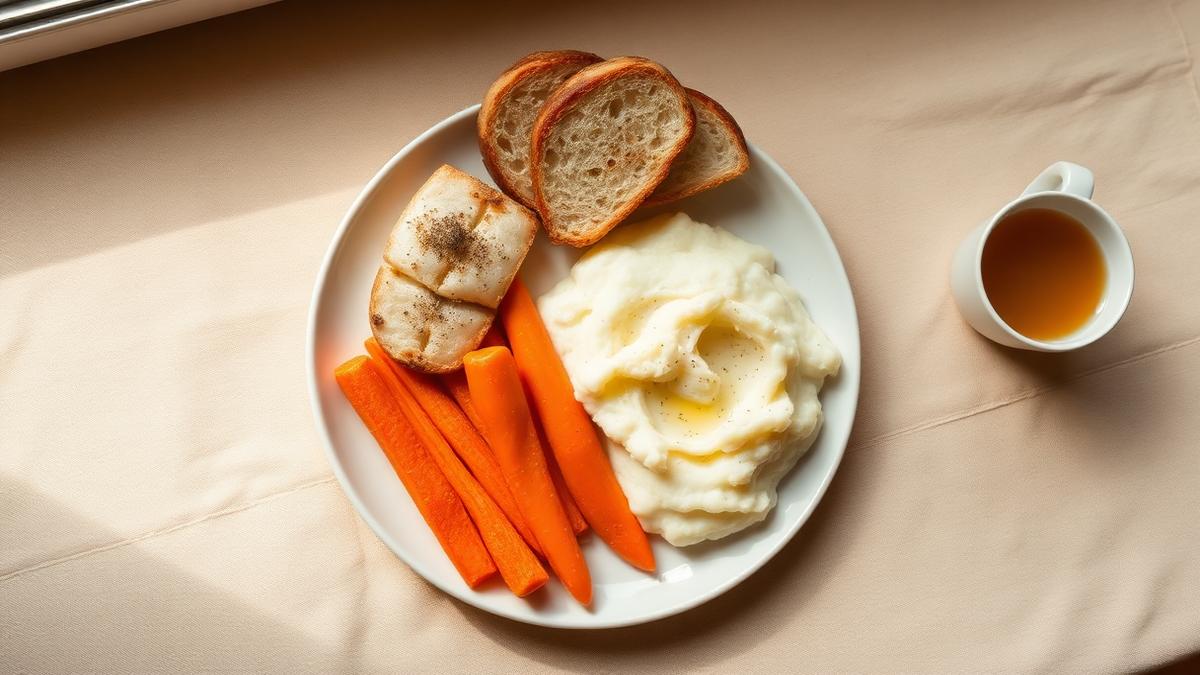
IBD flare, diverticulitis, bowel prep, strictures
Low Fibre / Low Residue Diet
Reduce stool volume and gut workload during a flare, stricture or recovery.
- Core restriction
- Under 10-15 g fibre/day; no seeds, skins, or tough residue
- Difficulty
- ●●●●●
- Check a food
- Open the food checker
A gentle reminder. This guide is for learning, not a prescription. Therapeutic diets interact with medication and conditions, so it's worth talking to your doctor or a registered dietitian before you begin.
A tidy few pages with the food lists, meal plan and reminders — good for the fridge door or the first appointment with your dietitian.
How it works
Fibre that reaches the colon undigested adds bulk, holds water and gets fermented. That is good for a healthy bowel and bad for an inflamed, narrowed or recently operated one.
A low fibre diet reduces the volume and frequency of stool and lowers mechanical irritation. Low residue goes a step further, also limiting milk and other foods that increase stool output.
It is a temporary support measure, not a treatment. It does not reduce inflammation in Crohn's or ulcerative colitis — medication does that — but it makes the symptoms more manageable while treatment takes effect.
Nutrition at a glance
A short-term therapeutic diet for a narrowed or inflamed gut — deliberately the opposite of general healthy-eating advice.
- Fibre
- 10-15 g/day
- Versus a usual target of 25-30 g
- Typical duration
- Days to weeks
- Longer only for a fixed stricture
- Meal size
- Small and frequent
- 5-6 light meals beat 3 large ones
- Texture
- Peeled, deseeded, well cooked
- Skins and seeds are the main residue
- Fluid
- 2 L/day
- Low fibre plus low fluid means constipation
Nutrients that often run short
- Fibre
- Vitamin C
- Folate
- Potassium
- Magnesium
- Plant variety
These are the ones worth planning for — through food where you can, and through a supplement your clinician suggests where you can't.
Key cautions
None of this is meant to frighten you off. These are simply the things that most often catch people out on this diet — the ones worth raising at your next appointment.
- Talk to a clinician
Should be prescribed and time-limited
This diet is for flares, strictures, diverticulitis and surgical recovery. Staying on it after the reason has passed harms the microbiome and bowel function.
- Worth testing
Weight and nutrition during long spells
If a stricture keeps you here for months, a dietitian should check intake and supplement gaps.
- Keep an eye on
Low residue does not mean low quality
Protein, calories and micronutrients still need to be there — refined does not have to mean beige and empty.
- Keep an eye on
Reintroduce fibre slowly
Add one high-fibre food every few days; going straight back to a normal diet usually causes cramping.
Used for
- Acute flare of Crohn's disease or ulcerative colitis
- Acute diverticulitis (fibre is increased again once it settles)
- Bowel strictures and partial obstruction risk
- Before and after bowel surgery, and during pelvic radiotherapy
- Severe acute diarrhoea
What to eat
Eat freely
Refined grains
- White bread
- White rice
- Plain pasta
- Cream of wheat
- Saltine crackers
- Cornflakes and rice cereal
Protein
- Tender meat, poultry and fish
- Eggs
- Smooth nut butter in small amounts
- Tofu
Cooked, peeled vegetables
- Peeled potato
- Peeled carrot, well cooked
- Green beans without strings
- Peeled zucchini
- Pumpkin puree
- Tomato sauce, strained
Fruit
- Banana
- Melon
- Tinned peaches or pears
- Applesauce
- Pulp-free juice
Eat with care
Individual tolerance
- Milk and yoghurt — limited on a true low residue diet
- Coffee and caffeine, which speed transit
- Fat and fried food during a flare
- Sugar alcohols and sugary drinks
Best to skip
Whole grains
- Wholemeal bread
- Brown rice
- Oats and bran
- Popcorn
- Granola
- Quinoa
Fibrous produce
- Raw vegetables and salad
- Skins and peels
- Corn
- Broccoli, cauliflower and cabbage
- Dried fruit
- Berries with seeds
Other
- Beans and lentils
- Nuts and seeds
- Coconut
- Tough or gristly meat
Three days of meals
Day 1
- Breakfast
- Cream of wheat with a little butter, half a banana.
- Lunch
- Chicken breast with white rice and peeled cooked carrot.
- Dinner
- Baked white fish, mashed peeled potato, strained tomato sauce.
- Snack
- Applesauce.
Day 2
- Breakfast
- Two scrambled eggs on white toast.
- Lunch
- Turkey sandwich on white bread with mayonnaise, no lettuce.
- Dinner
- Plain pasta with butter and shredded chicken.
- Snack
- Tinned peaches.
Day 3
- Breakfast
- Rice cereal with lactose-free milk.
- Lunch
- Chicken noodle soup with well-cooked noodles and strained broth.
- Dinner
- Meatloaf without breadcrumbs, peeled zucchini, white rice.
- Snack
- Melon cubes.
Getting started
- 1
Confirm with your gastroenterologist how long to stay on it. Most uses are measured in days to a few weeks.
- 2
Peel, deseed and cook everything. Preparation matters more than the vegetable you pick.
- 3
Watch protein and calories; low fibre diets are easy to under-eat on during a flare.
- 4
Take a multivitamin if you are on it more than a couple of weeks — this diet is low in vitamin C, folate and potassium.
- 5
Plan the return to fibre gradually, adding one soft fibre source every few days.
Common mistakes
- Staying low fibre indefinitely after a diverticulitis episode. Once healed, higher fibre reduces recurrence.
- Assuming low fibre means low nutrition is acceptable — it should still be balanced.
- Confusing low fibre with low FODMAP; they solve different problems and their food lists disagree.
- Drinking too little, which turns low residue into constipation.
- Using it instead of medication in an IBD flare.
FAQs
How much fibre is 'low'?
Typically under 10-15 g a day, versus a recommended 25-30 g. Low residue adds limits on dairy and other stool-bulking foods.
Should I stay on it after diverticulitis?
No. Low fibre is for the acute episode. Long-term prevention is a high fibre diet, reintroduced gradually once inflammation settles.
Can I have smoothies?
Blending does not remove fibre, only makes it smaller. Strained juice is low fibre; a whole-fruit smoothie is not.
Stacking with other diets
- Directly contradicts most 'gut health' advice; that advice is written for a healthy colon.
- Overlaps with gastroparesis diets, which also favour low fibre and soft textures.
- Combines with gluten-free easily using white rice and GF white bread.