Histamine intolerance, MCAS
Low Histamine Diet
Lower the histamine bucket when your body can't clear it fast enough.
- Core restriction
- Aged, fermented and leftover foods; histamine liberators
- Difficulty
- ●●●●●
- Check a food
- Open the food checker
A gentle reminder. This guide is for learning, not a prescription. Therapeutic diets interact with medication and conditions, so it's worth talking to your doctor or a registered dietitian before you begin.
A tidy few pages with the food lists, meal plan and reminders — good for the fridge door or the first appointment with your dietitian.
How it works
Histamine is present in food, released by your own mast cells, and cleared mainly by the enzyme diamine oxidase (DAO) in the gut lining. When intake plus release exceeds clearance, you get a scattered picture — flushing, headache, hives, nasal congestion, palpitations, loose stools — that follows no single food reliably.
That is the 'bucket' model, and it explains why the same glass of red wine is fine on Tuesday and awful on Friday. It is a threshold problem, not a true allergy.
Histamine accumulates with time and microbial action. Fresh fish is low; the same fish after two days in the fridge is high. Cooking does not destroy it.
Nutrition at a glance
Histamine tolerance is a bucket, not a threshold — total load and food freshness matter more than any single item.
- Trial length
- 2-4 weeks
- Enough to see a pattern, short enough to be safe
- Leftovers
- Eat within 24 h or freeze
- Histamine builds in the fridge
- Fish
- Fresh or frozen-at-sea only
- The single biggest dietary source
- Fermented foods
- Removed in the trial
- Cheese, wine, vinegar, cured meat, soy sauce
- Reintroduction
- One food every 2-3 days
- Symptoms can lag by hours
Nutrients that often run short
- Vitamin C
- Fibre
- Calcium
- Plant variety
- Protein if fish and cheese are both out
These are the ones worth planning for — through food where you can, and through a supplement your clinician suggests where you can't.
Key cautions
None of this is meant to frighten you off. These are simply the things that most often catch people out on this diet — the ones worth raising at your next appointment.
- Talk to a clinician
Rule out true allergy and mast cell disease first
Histamine intolerance is a diagnosis of exclusion. Anaphylaxis, IgE allergy and MCAS need medical assessment, not a food list.
- Worth testing
Some medications block DAO
Certain NSAIDs, antibiotics and antidepressants reduce diamine oxidase activity. Review your list with a pharmacist before assuming food is the whole story.
- Keep an eye on
Published food lists disagree wildly
Histamine content is not routinely measured and varies with storage. Trust your own diary over any chart you find online.
- Keep an eye on
Long-term restriction is nutritionally poor
Staying on the trial list for a year rarely helps and narrows nutrition sharply. Reintroduce to the widest diet you tolerate.
Used for
- Histamine intolerance / DAO deficiency
- Mast cell activation syndrome, as an adjunct to medical therapy
- Chronic spontaneous urticaria
- Some migraine, especially wine- and cheese-triggered
- Symptomatic overlap with SIBO and post-viral syndromes
What to eat
Eat freely
Fresh protein
- Meat and poultry cooked the day it is bought or from frozen
- Fish frozen at sea and cooked from frozen
- Egg yolk
Vegetables
- Zucchini
- Carrot
- Broccoli
- Cucumber
- Lettuce
- Sweet potato
- Onion
- Asparagus
- Cabbage
Fruit
- Apple
- Pear
- Blueberry
- Mango
- Peach
- Melon
Staples
- Rice
- Oats
- Quinoa
- Olive oil
- Fresh mozzarella and ricotta
- Herbs
Eat with care
Individually variable
- Egg white — a histamine liberator for some
- Citrus, banana, papaya, pineapple — liberators rather than high-histamine
- Chocolate and cocoa
- Yeast-leavened bread
- Legumes
- Coffee, which blocks DAO in some people
Best to skip
Aged and fermented
- Aged cheese
- Salami, prosciutto and cured meat
- Sauerkraut and kimchi
- Soy sauce, miso, vinegar
- Kombucha
- Yoghurt and kefir
High-histamine fish
- Tuna
- Mackerel
- Sardines
- Anchovies
- Any fish not frozen promptly
- Tinned fish
Other
- Red wine, beer, champagne
- Tomato
- Spinach
- Eggplant
- Avocado
- Dried fruit
- Leftovers older than 24 hours
Three days of meals
Day 1
- Breakfast
- Oats cooked with fresh milk, sliced apple, cinnamon.
- Lunch
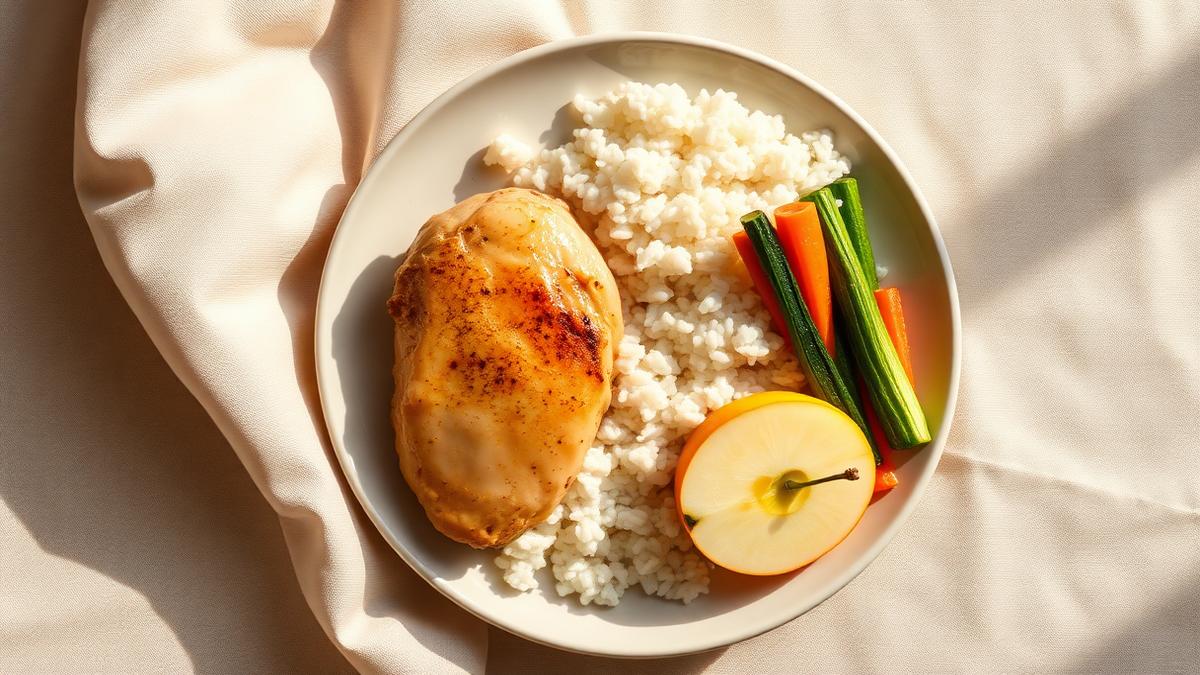
- Chicken breast cooked from fresh, quinoa, roasted carrot and zucchini.
- Dinner
- Cod cooked from frozen with olive oil, rice, broccoli.
- Snack
- Blueberries and a fresh mozzarella ball.
Day 2
- Breakfast
- Rice porridge with pear and maple syrup.
- Lunch
- Fresh turkey mince stir fry with cabbage and carrot over rice.
- Dinner
- Lamb chops, sweet potato mash, asparagus.
- Snack
- Sliced mango.
Day 3
- Breakfast
- Ricotta with peach and a drizzle of honey.
- Lunch
- Chicken and cucumber salad, olive oil and salt, no vinegar.
- Dinner
- Pork loin, boiled potato, green beans.
- Snack
- Rice cakes with fresh butter.
Getting started
- 1
Freeze in portions and cook from frozen. Storage handling changes histamine load more than food choice does.
- 2
Run a strict two-to-four week reduction, not longer, then reintroduce systematically.
- 3
Keep a symptom-and-timing diary; histamine reactions often lag 30 minutes to several hours.
- 4
Discuss antihistamines, cromolyn or DAO supplements with your clinician — diet alone rarely covers the whole load.
- 5
Rule out mimics: mastocytosis, carcinoid, thyroid disease and SIBO all present similarly.
Common mistakes
- Treating published histamine food lists as precise. They disagree wildly and are mostly not based on measured values.
- Eating 'safe' foods four days out of the fridge.
- Staying restricted for a year. Long-term low histamine eating is nutritionally poor and rarely necessary.
- Missing non-food triggers — heat, exercise, stress, alcohol, NSAIDs, some contrast agents.
- Ignoring gut health, when overgrowth and inflammation reduce DAO activity directly.
FAQs
Can I test for histamine intolerance?
Serum DAO and histamine levels are unreliable. The practical test is a supervised elimination followed by reintroduction. Your clinician may test tryptase to look for mast cell disease.
Does cooking destroy histamine?
No. Histamine is heat stable. Freshness and cold-chain handling are what matter.
Is it permanent?
Usually not. Many people tolerate far more once an underlying driver — overgrowth, inflammation, medication — is dealt with.
Stacking with other diets
- Low histamine plus SIBO is a common pairing; treating overgrowth usually raises histamine tolerance.
- Conflicts with fermented-food-heavy 'gut health' advice — probiotic strains matter, since some produce histamine.
- Combining with low FODMAP shrinks the safe list drastically. Sequence: FODMAP first, histamine second.