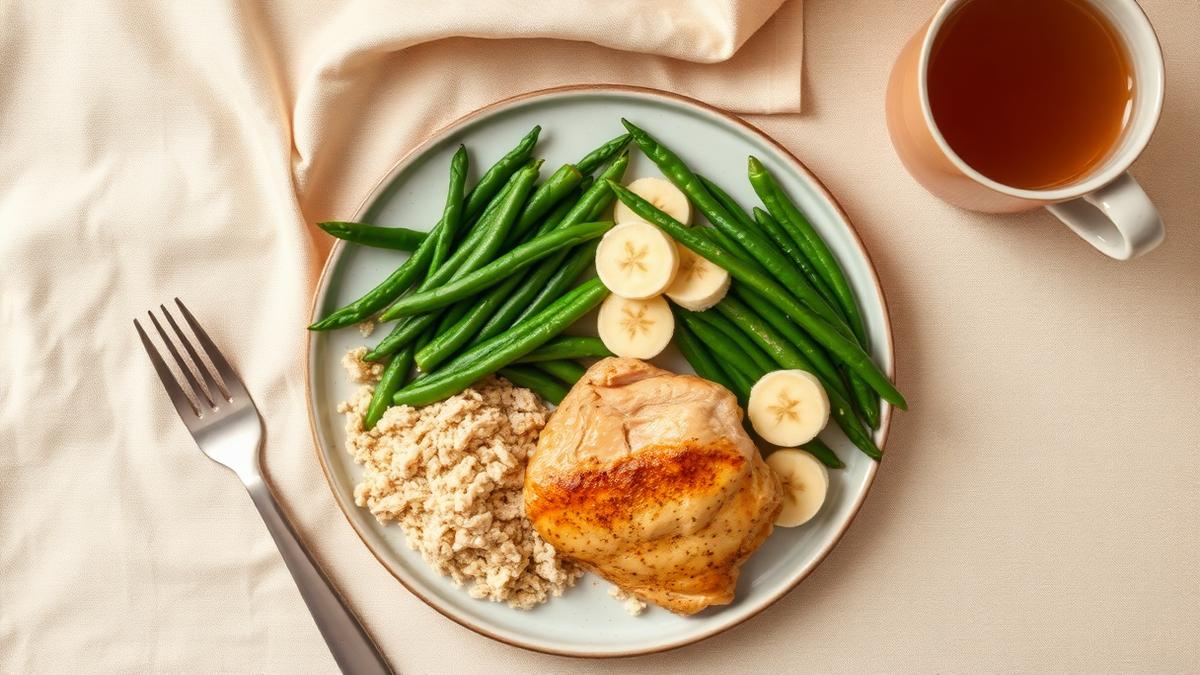
Acid reflux, LPR, oesophagitis
GERD / Reflux Diet
Fewer triggers, smaller meals, and gravity on your side.
- Core restriction
- Trigger foods, meal size, late eating
- Difficulty
- ●●●●●
- Check a food
- Open the food checker
A gentle reminder. This guide is for learning, not a prescription. Therapeutic diets interact with medication and conditions, so it's worth talking to your doctor or a registered dietitian before you begin.
A tidy few pages with the food lists, meal plan and reminders — good for the fridge door or the first appointment with your dietitian.
How it works
Reflux happens when the lower oesophageal sphincter relaxes at the wrong time or is mechanically overwhelmed. Some foods relax the sphincter directly — fat, chocolate, mint, alcohol, caffeine. Others do not cause reflux but irritate an already inflamed oesophagus, like citrus, tomato and spice.
Volume and timing matter more than most people expect. A large late meal raises gastric pressure at exactly the point you lie down and lose the help of gravity.
Weight around the abdomen raises intragastric pressure; modest weight loss is one of the few interventions with strong evidence in reflux.
Nutrition at a glance
Meal timing, portion size and body position drive reflux at least as much as which foods you choose.
- Last meal
- 3 hours before bed
- The best-evidenced change on this list
- Meal size
- Small, 4-6 a day
- Volume raises pressure on the valve
- Bed head elevation
- 15-20 cm
- Blocks under the bed, not extra pillows
- Fat
- Moderate
- High-fat meals slow emptying and relax the sphincter
- Weight
- 5-10% loss if overweight
- Reliably reduces symptoms
Nutrients that often run short
- Vitamin C if citrus and tomato are cut
- Fibre
- Plant variety
- Calcium
These are the ones worth planning for — through food where you can, and through a supplement your clinician suggests where you can't.
Key cautions
None of this is meant to frighten you off. These are simply the things that most often catch people out on this diet — the ones worth raising at your next appointment.
- Talk to a clinician
Alarm symptoms need endoscopy
Trouble swallowing, food sticking, vomiting, weight loss, anaemia or black stools need urgent assessment rather than a diet trial.
- Worth testing
Long-standing reflux carries a Barrett's risk
Years of untreated symptoms warrant a conversation about surveillance, not just symptom control.
- Keep an eye on
Trigger lists are personal
Coffee, chocolate, mint, citrus and tomato affect some people and not others. Cut everything for two weeks, then test them individually rather than avoiding all of them for life.
- Keep an eye on
Chest pain is not always reflux
New, exertional or radiating chest pain is a cardiac question until someone rules it out.
Used for
- Gastro-oesophageal reflux disease
- Laryngopharyngeal reflux — cough, hoarseness, throat clearing
- Erosive oesophagitis and Barrett's oesophagus, alongside medical therapy
- Hiatus hernia symptoms
- Reflux in pregnancy
What to eat
Eat freely
Low-acid, low-fat protein
- Grilled chicken and turkey without skin
- White fish
- Egg whites
- Tofu
- Lean beef in modest portions
Vegetables
- Green beans
- Broccoli
- Asparagus
- Cauliflower
- Cucumber
- Potato
- Leafy greens
Fruit
- Banana
- Melon
- Pear
- Apple
Grains
- Oatmeal
- Brown and white rice
- Wholegrain bread
- Couscous
Eat with care
Common but individual triggers
- Coffee and tea
- Chocolate
- Carbonated drinks
- Garlic and onion
- Cheese and higher-fat dairy
- Large portions of anything, even safe foods
Best to skip
Sphincter relaxers
- Fried and high-fat food
- Chocolate
- Peppermint and spearmint
- Alcohol
- Large amounts of caffeine
Irritants
- Tomato and tomato sauce
- Citrus and citrus juice
- Chilli and hot sauce
- Vinegar-heavy dressings
- Very spicy curries
Habits, not foods
- Eating within three hours of bed
- Very large meals
- Tight waistbands
- Smoking
- Lying flat without head elevation
Three days of meals
Day 1
- Breakfast
- Oatmeal with banana and a spoon of honey.
- Lunch
- Grilled chicken with couscous, cucumber and steamed green beans.
- Dinner
- Baked cod, rice, roasted asparagus. Finished by 7pm.
- Snack
- Pear slices.
Day 2
- Breakfast
- Egg white omelette with spinach, wholegrain toast.
- Lunch
- Turkey and lettuce wrap, small side of carrot sticks.
- Dinner
- Chicken and vegetable soup with potato and celery, no tomato.
- Snack
- Melon.
Day 3
- Breakfast
- Porridge with pear compote.
- Lunch
- Tofu and broccoli over rice with ginger, no chilli.
- Dinner
- Lean roast beef, mashed potato with olive oil, cauliflower.
- Snack
- Plain rice cakes.
Getting started
- 1
Shrink meals and eat earlier before you start banning foods. Timing and volume beat food lists for most people.
- 2
Raise the head of the bed 15-20 cm with blocks, not extra pillows, which bend you at the waist and make it worse.
- 3
Keep a two-week trigger diary rather than eliminating everything at once.
- 4
Get red flags checked: difficulty swallowing, weight loss, vomiting blood or anaemia need urgent assessment, not diet.
- 5
Review medications. Calcium channel blockers, nitrates, some asthma drugs and NSAIDs all worsen reflux.
Common mistakes
- Banning tomato, citrus and coffee forever when only one of them is actually your trigger.
- Snacking constantly to 'buffer acid', which keeps the stomach loaded all day.
- Drinking large volumes with meals.
- Stopping a PPI abruptly, which causes rebound acid hypersecretion — taper with your doctor.
- Treating persistent symptoms as a diet failure when they need endoscopy.
FAQs
Is there one 'reflux diet'?
No. Trigger foods are individual, and the strongest evidence supports weight loss, smaller meals, earlier dinners and bed elevation rather than any specific food list.
Does alkaline water help?
Evidence is thin. Some small studies on pepsin deactivation in LPR exist; it is unlikely to be the deciding factor for most people.
Should I be low carb?
Some trials show reduced reflux on low carbohydrate diets, possibly through weight loss and reduced fermentation. It is a reasonable trial, not established therapy.
Stacking with other diets
- GERD advice conflicts with keto's very high fat intake — go moderate-fat if you are combining them.
- Overlaps well with DASH and low fibre approaches, both of which favour moderate, simple meals.
- Combines fine with gluten-free and low FODMAP; reflux triggers are a different axis entirely.