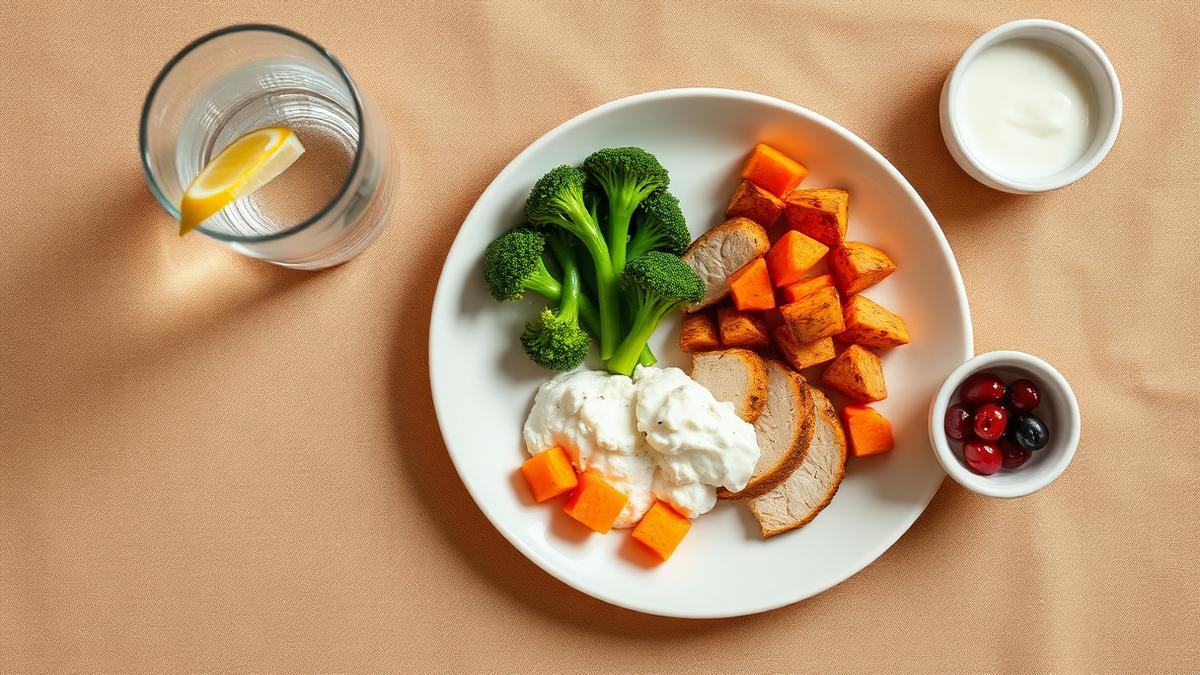
Weight management on GLP-1 medication
GLP-1 Plan: 1200-Calorie Minimum, Muscle-Sparing
A protein-first floor of at least 1200 kcal for people on semaglutide or tirzepatide — because the real risk on these medications is eating too little, not too much.
- Core restriction
- A minimum of ~1200 kcal/day with 100-120 g protein and resistance training
- Difficulty
- ●●●●●
- Check a food
- Open the food checker
A gentle reminder. This guide is for learning, not a prescription. Therapeutic diets interact with medication and conditions, so it's worth talking to your doctor or a registered dietitian before you begin.
A tidy few pages with the food lists, meal plan and reminders — good for the fridge door or the first appointment with your dietitian.
How it works
GLP-1 medications work by slowing gastric emptying and blunting appetite signalling, so intake falls without much conscious effort. The problem is what comes off: in trials of semaglutide and tirzepatide, roughly a quarter to 40% of the weight lost is lean mass rather than fat.
Two things protect muscle during a deficit. The first is protein — 1.2 to 1.6 g per kilogram of body weight, which at typical body sizes lands between 100 and 140 g a day. The second is resistance training two or three times a week, which gives the body a reason to keep the tissue it would otherwise break down.
This is why 1200 kcal here is a minimum, not a ceiling. On these medications most people simply lose interest in food, and the common failure is drifting down to 700 kcal of toast and tea — losing muscle, hair and bone density along the way. The job of this plan is to make sure you eat at least 1200 kcal, with the protein inside it.
1200 is the low end of what an adult body needs, and it is the right floor only for smaller-framed people. Taller adults, men, anyone still growing, and anyone training hard should scale the floor up — commonly 1400-1800 kcal — keeping the same protein-first structure. Your prescriber or dietitian should set your number.
Protein first at every meal solves most of this. When you can only eat a small volume, the order you eat in decides what you actually get: protein, then vegetables, then whatever fits.
Nutrition at a glance
Read these as minimums to reach, not limits to stay under. Protein and resistance training decide whether the weight you lose is fat.
- Energy floor
- 1200 kcal/day minimum
- The least you should eat; scale up for height, sex and activity with your prescriber
- Protein
- 100-120 g/day
- 1.2-1.6 g/kg, split into 30-40 g doses
- Fat
- 30-40 g/day
- Enough for hormones and fat-soluble vitamins; more triggers nausea
- Fibre
- 25 g/day
- Constipation is the most common complaint on GLP-1 therapy
- Resistance training
- 2-3 sessions/week
- Non-negotiable if muscle tone is the goal
Nutrients that often run short
- Protein
- Calcium
- Vitamin D
- Vitamin B12
- Iron
- Fibre
- Electrolytes
These are the ones worth planning for — through food where you can, and through a supplement your clinician suggests where you can't.
Key cautions
None of this is meant to frighten you off. These are simply the things that most often catch people out on this diet — the ones worth raising at your next appointment.
- Talk to a clinician
1200 kcal is a floor, and for many people the floor is higher
It is the minimum for a smaller-framed adult. Most men, taller adults and anyone training hard need 1400-1800 kcal as their floor, and this plan is not appropriate in pregnancy, breastfeeding, or with a history of an eating disorder.
- Talk to a clinician
Diabetes medication needs adjusting as you lose weight
Insulin and sulfonylureas can cause hypoglycaemia at this intake. Doses often need to come down within weeks — that is a prescriber decision, not a self-managed one.
- Talk to a clinician
Persistent vomiting or severe abdominal pain is not normal
Seek urgent care. Pancreatitis and gallbladder disease are recognised risks of both rapid weight loss and GLP-1 medication.
- Worth testing
Lean mass, not just the scale
Grip strength, waist circumference and how you manage stairs track body composition better than weight. A DEXA or bioimpedance scan every few months is ideal.
- Worth testing
Bone density on prolonged restriction
Low calorie plus low calcium plus low resistance loading is a bad combination for bone. Keep calcium at 1000 mg and vitamin D topped up.
- Keep an eye on
Hair shedding and fatigue
Telogen effluvium is common after rapid loss and usually reflects too little protein and energy rather than the drug itself.
- Keep an eye on
Plan the exit before you need it
Appetite returns when the medication stops. Agree a step-up to maintenance calories with your clinician rather than improvising.
Used for
- Weight management on semaglutide, liraglutide or tirzepatide
- Type 2 diabetes with obesity, under a prescriber's supervision
- Post-bariatric patients using GLP-1 support
- Anyone on GLP-1 therapy concerned about sarcopenia or falling strength
- Not appropriate during pregnancy, breastfeeding, or with a history of an eating disorder
What to eat
Eat freely
Protein first
- Chicken and turkey breast
- White fish and tinned tuna in water
- Prawns
- Eggs and egg whites
- 0% Greek yoghurt and skyr
- Cottage cheese
- Tofu and edamame
- Whey or pea protein powder
Volume vegetables
- Leafy greens
- Courgette and cucumber
- Broccoli and cauliflower
- Peppers and tomatoes
- Green beans
- Mushrooms
- Cabbage and slaw mixes
Fluids and electrolytes
- Water — 2 litres a day, sipped
- Broth and clear soups
- Sugar-free electrolyte sachets
- Herbal tea
- Black coffee, in moderation
Eat with care
Measured, because the budget is small
- Starches — half a cup of rice, potato or oats per meal at most
- Fats — one tablespoon of oil, a third of an avocado, ten nuts
- Fruit — two portions a day, whole rather than juiced
- Cheese, which is mostly fat by calories
- Protein bars and shakes, which are useful when appetite is gone but should not replace every meal
- Alcohol, which suppresses nothing useful and costs 7 kcal a gram
Best to skip
Poor value for the calories
- Sugar-sweetened drinks and juice
- Fried food
- Pastries, biscuits and crisps
- Creamy sauces and dressings
- Large portions of fat — GLP-1 nausea is often a high-fat meal
Hard on a slowed stomach
- Very large meals of any kind
- Heavy, greasy food late at night
- Carbonated drinks, for some people
- Alcohol on an empty stomach
Not on this plan
- Skipping meals entirely because appetite is absent
- Any day that lands below your 1200 kcal floor
- Protein-free breakfasts
Three days of meals
Day 1
- Breakfast (~250 kcal, 30 g protein)
- 170 g 0% Greek yoghurt with a scoop of protein powder, 80 g raspberries and a teaspoon of chia.
- Lunch (~350 kcal, 38 g protein)
- 120 g grilled chicken over a large salad with cucumber, tomato, peppers and a teaspoon of olive oil vinaigrette.
- Dinner (~400 kcal, 40 g protein)
- 150 g baked cod, half a cup of rice, and a plateful of roasted broccoli and courgette.
- Snack (~150 kcal, 15 g protein)
- Half a cup of cottage cheese with cherry tomatoes.
Day 2
- Breakfast (~250 kcal, 26 g protein)
- Two eggs plus two egg whites scrambled with spinach and mushrooms, one slice of wholegrain toast.
- Lunch (~330 kcal, 35 g protein)
- Tuna and white bean salad — one small tin, quarter cup beans, rocket, lemon, a teaspoon of oil.
- Dinner (~420 kcal, 42 g protein)
- 150 g turkey mince chilli with peppers and tomatoes, quarter cup rice, a spoon of yoghurt on top.
- Snack (~150 kcal, 20 g protein)
- A protein shake made with water, or skyr with cinnamon.
Day 3
- Breakfast (~240 kcal, 28 g protein)
- Overnight oats — 25 g oats, a scoop of protein powder, water or skimmed milk, half a banana.
- Lunch (~340 kcal, 36 g protein)
- Prawn and edamame rice-paper bowl with shredded cabbage, carrot and a lime-soy dressing.
- Dinner (~410 kcal, 40 g protein)
- 150 g chicken thigh (skin off) with a small baked sweet potato and green beans.
- Snack (~160 kcal, 16 g protein)
- Cottage cheese with a few walnuts, or a boiled egg and an apple.
Getting started
- 1
Confirm your floor with your prescriber. 1200 kcal is the minimum for a smaller-framed adult; taller people, men and anyone active usually need a floor of 1400-1800 on the same medication. Whatever the number, treat it as the amount to reach, not to stay under.
- 2
Set the protein floor before anything else: 100-120 g a day, roughly 30-40 g per meal. Hit that and the rest of the plan is flexible.
- 3
Lift something twice a week. Resistance training is the single most protective thing you can do for lean mass in a deficit; walking alone will not do it.
- 4
Eat protein first at every meal. When the medication cuts your capacity in half, the first half should be the part that protects muscle.
- 5
Weigh and log food for the first two weeks — not to cap yourself, but to see how far under the floor appetite suppression is taking you. Most people are surprised by how little they have eaten.
- 6
Track more than the scale. Waist measurement, grip strength, how many stairs you can climb and how your clothes fit tell you whether you are losing fat or muscle.
- 7
Keep an eye on hydration and electrolytes from day one — see the note further down this page.
Common mistakes
- Eating 600-800 kcal a day because nothing appeals. Rapid weight loss with no protein is how you lose muscle, hair and bone.
- Getting protein from one meal only. Muscle protein synthesis responds to per-meal doses; 100 g at dinner is not the same as 30 g three times.
- Skipping resistance training and assuming the medication handles body composition. It does not.
- Fearing all fat. You still need 30-40 g a day for hormones and fat-soluble vitamins — just measured.
- Ignoring constipation until it becomes a problem. Low food volume plus slowed motility plus low fluid is a predictable combination.
- Stopping the medication abruptly without a maintenance plan, which is when regain usually happens.
- Treating 1200 as a target to stay under. It is the minimum to reach; eating less does not speed anything useful up.
- Staying at the floor indefinitely. This is a phase, not a permanent setting — plan the transition to maintenance with your clinician.
FAQs
How much protein do I actually need?
In a deficit, 1.2-1.6 g per kilogram of body weight, and towards the upper end if you are over 60 or training hard. For most people on this plan that is 100-140 g a day, split into three or four doses of 30-40 g.
Is 1200 calories a target or a minimum?
A minimum. On GLP-1 medication appetite often disappears, and the usual problem is eating far too little rather than too much. 1200 kcal is the floor for a smaller-framed adult — if you are taller, male or active, scale your own floor up to 1400-1800 kcal and aim to reach it every day.
What if I genuinely cannot eat that much food?
This is the most common problem on GLP-1 therapy. Use liquid calories deliberately: protein shakes, Greek yoghurt, skyr, soups blended with silken tofu. A 30 g protein shake takes two minutes and no appetite.
Why do I feel sick after some meals?
High-fat and very large meals are the usual triggers on a slowed stomach. Smaller volumes, less fat, and stopping at the first sign of fullness fixes it for most people.
Will I lose muscle no matter what?
Some lean-mass loss is normal in any deficit — connective tissue and glycogen water come off too. What you control is the size of that fraction, and adequate protein plus resistance training reliably shrinks it.
What happens when I stop the medication?
Appetite returns, often sharply. The muscle you kept, the habits you built and a planned step up to maintenance calories are what decide whether the weight comes back.
Stacking with other diets
- Layers onto almost any other diet here, because it is a calorie and protein framework rather than a food-exclusion list.
- Combines well with DASH or the vegetarian heart pattern if you keep the protein target — plant protein needs slightly higher totals.
- Pairs naturally with the gastroparesis guide, since GLP-1 medications slow gastric emptying in much the same way.
- Conflicts with keto in practice: at 1200 kcal, very high fat leaves almost no room for the protein this plan is built around.
- Not to be combined with fasting protocols while on GLP-1 medication without medical advice.