Chronic kidney disease, dialysis
Renal (Kidney) Diet
Control potassium, phosphorus, sodium and protein when kidneys can't.
- Core restriction
- Sodium, potassium, phosphorus; protein adjusted by stage
- Difficulty
- ●●●●●
- Check a food
- Open the food checker
A gentle reminder. This guide is for learning, not a prescription. Therapeutic diets interact with medication and conditions, so it's worth talking to your doctor or a registered dietitian before you begin.
A tidy few pages with the food lists, meal plan and reminders — good for the fridge door or the first appointment with your dietitian.
How it works
Healthy kidneys excrete potassium, phosphate, sodium and the nitrogen waste from protein. As filtration falls, those build up. High potassium can stop the heart; high phosphate pulls calcium from bone and calcifies arteries; sodium drives fluid overload and blood pressure.
Targets change with stage and with dialysis. Pre-dialysis CKD often restricts protein moderately to slow progression. On haemodialysis, protein requirements go up, because dialysis removes amino acids.
Phosphate additives in processed food are absorbed at nearly 100%, versus 40-60% from natural protein sources. Reading labels for 'PHOS' ingredients often achieves more than cutting dairy.
Nutrition at a glance
Renal targets change with CKD stage, lab results and whether you are on dialysis, so these are ranges rather than rules.
- Sodium
- Under 2000 mg/day
- The single highest-impact change
- Potassium
- 2000-3000 mg/day
- Only if blood levels are high
- Phosphorus
- 800-1000 mg/day
- Additives first — they are almost fully absorbed
- Protein pre-dialysis
- 0.6-0.8 g/kg
- Moderated to slow progression
- Protein on dialysis
- 1.0-1.2 g/kg
- Requirements go up, not down
- Fluid
- Individualised
- Often restricted on dialysis
Nutrients that often run short
- Protein (on dialysis)
- Calories
- Water-soluble vitamins
- Iron
- Vitamin D
These are the ones worth planning for — through food where you can, and through a supplement your clinician suggests where you can't.
Key cautions
None of this is meant to frighten you off. These are simply the things that most often catch people out on this diet — the ones worth raising at your next appointment.
- Talk to a clinician
Never self-prescribe a renal diet
Targets depend on eGFR, potassium, phosphate, PTH and dialysis schedule. A renal dietitian sets them from your bloods, and they change over time.
- Talk to a clinician
High potassium is a cardiac emergency risk
Salt substitutes are usually potassium chloride and can be genuinely dangerous in advanced CKD. Read every 'low sodium' label.
- Worth testing
Malnutrition outranks most lab values
Cutting protein and calories on dialysis drives protein-energy wasting, which predicts mortality more strongly than a single high phosphate reading.
- Keep an eye on
Phosphate additives hide in plain sight
Anything with 'PHOS' in the ingredients is absorbed at nearly 100%, versus 40-60% from natural sources. Labels beat food lists here.
Used for
- Chronic kidney disease stages 3-5
- Haemodialysis and peritoneal dialysis
- Hyperkalaemia from any cause
- Kidney transplant recipients, with different targets again
- Diabetic nephropathy
What to eat
Eat freely
Low potassium vegetables
- Cabbage
- Cauliflower
- Green beans
- Onion
- Cucumber
- Lettuce
- Bell pepper
- Leached and boiled potato
Low potassium fruit
- Apple
- Berries
- Grapes
- Pineapple
- Cranberry
- Peach (tinned, drained)
Low phosphorus staples
- White bread
- White rice
- Pasta
- Cornflakes
- Rice milk (unenriched)
- Unsalted butter and olive oil
Flavour without salt
- Herbs
- Garlic and onion powder without salt
- Lemon juice
- Vinegar
- Black pepper
Eat with care
Portion and lab dependent
- Protein — the target depends on your stage and whether you dialyse
- Dairy, which is high in phosphorus and potassium
- Whole grains and brown rice, higher in phosphorus than white
- Fluid, if you are on a fluid restriction
- Potatoes, which can be double-boiled to leach potassium
Best to skip
High potassium
- Banana
- Orange and orange juice
- Potato (unleached)
- Tomato and tomato sauce
- Avocado
- Spinach
- Dried fruit
- Beans
- Salt substitutes containing potassium chloride
High phosphorus
- Cola drinks
- Processed cheese
- Milk in quantity
- Nuts and seeds
- Whole grains and bran
- Organ meats
- Any label listing phosphoric acid or 'PHOS' additives
High sodium
- Processed and cured meat
- Tinned soup
- Instant noodles
- Fast food
- Soy sauce
- Salted snacks
- Most restaurant food
Three days of meals
Day 1
- Breakfast
- Cornflakes with rice milk, half an apple.
- Lunch
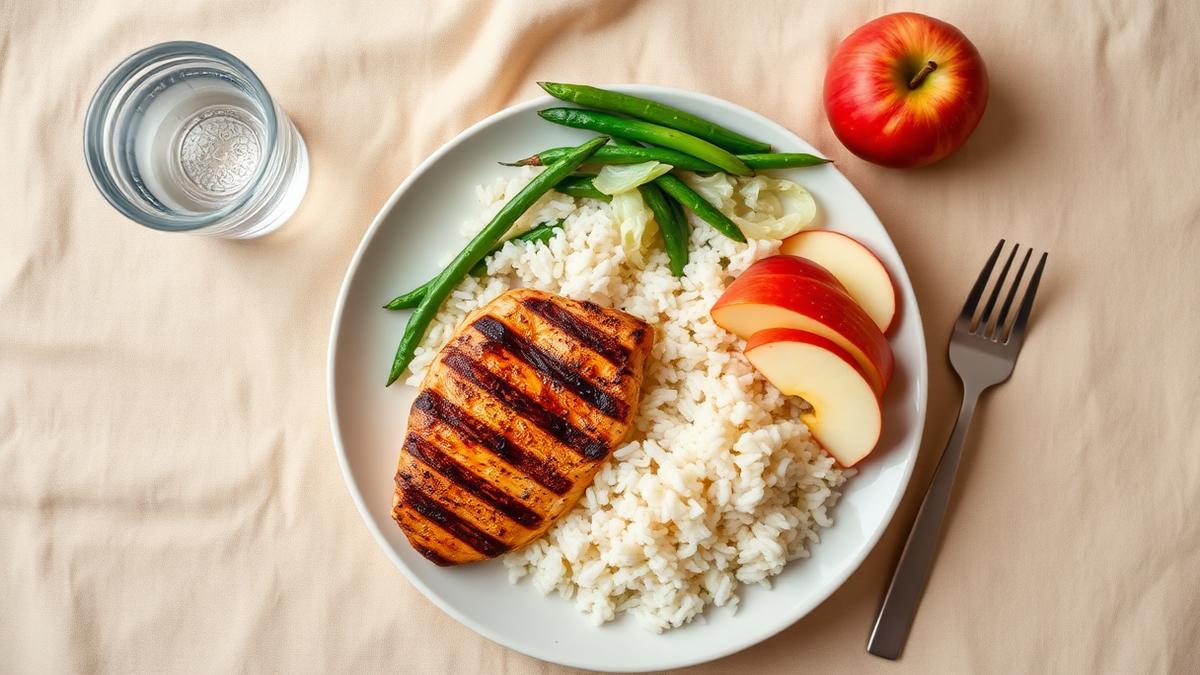
- Chicken breast portioned to target, white rice, green beans.
- Dinner
- Baked fish, double-boiled potato, cabbage sauteed in olive oil, herbs and lemon.
- Snack
- Grapes.
Day 2
- Breakfast
- White toast with unsalted butter and a small egg.
- Lunch
- Pasta with olive oil, garlic powder, roast pepper and a portioned chicken thigh.
- Dinner
- Pork loin, white rice, boiled cauliflower with black pepper.
- Snack
- Tinned peaches, drained.
Day 3
- Breakfast
- Rice porridge with cinnamon and blueberries.
- Lunch
- Chicken salad sandwich on white bread with cucumber and lettuce.
- Dinner
- Beef stir fry with cabbage and pepper over rice, no soy sauce.
- Snack
- Fresh pineapple.
Getting started
- 1
This is the one diet on the site you should not self-manage. Ask for a referral to a renal dietitian — targets come from your bloods, not from a website.
- 2
Bring your latest potassium, phosphate, albumin and eGFR results to every diet conversation.
- 3
Learn label reading for phosphate additives; they are the highest-yield change most people can make.
- 4
Never use a potassium-based salt substitute unless your renal team has cleared it.
- 5
Double-boil potatoes and root vegetables: cube, boil, drain, boil again in fresh water.
Common mistakes
- Cutting protein while on dialysis, which drives malnutrition — a bigger mortality risk than most lab values.
- Assuming healthy foods are safe. Avocado, spinach, banana and nuts are excellent foods and dangerous here.
- Using 'lo-salt' products full of potassium chloride.
- Ignoring fluid limits between dialysis sessions.
- Following a generic renal list instead of your current stage's targets, which change over time.
FAQs
Why is protein sometimes restricted and sometimes increased?
Pre-dialysis, lower protein reduces the filtration burden and may slow progression. On dialysis, the treatment itself removes amino acids, so requirements rise substantially.
Are plant-based renal diets viable?
Yes, and increasingly recommended. Plant phosphorus is poorly absorbed, and plant-dominant patterns can help with acid load — but they need careful potassium planning.
Does cooking reduce potassium?
Yes. Cubing and double-boiling can remove a substantial share of potassium from potatoes and root vegetables.
Stacking with other diets
- Conflicts badly with keto: standard keto is high in protein, phosphorus and potassium-rich vegetables.
- Overlaps with DASH on sodium, but DASH's high potassium emphasis is exactly wrong for advanced CKD.
- Low oxalate and renal diets share the kidney focus but restrict different foods — get both reviewed together.